


Big AI investors increase entry-level hiring, research finds
Companies making the largest AI investments increased the share of entry-level workers in their workforce, while lower intensity adopters recorded a decline, according to new research from Revelio Labs.
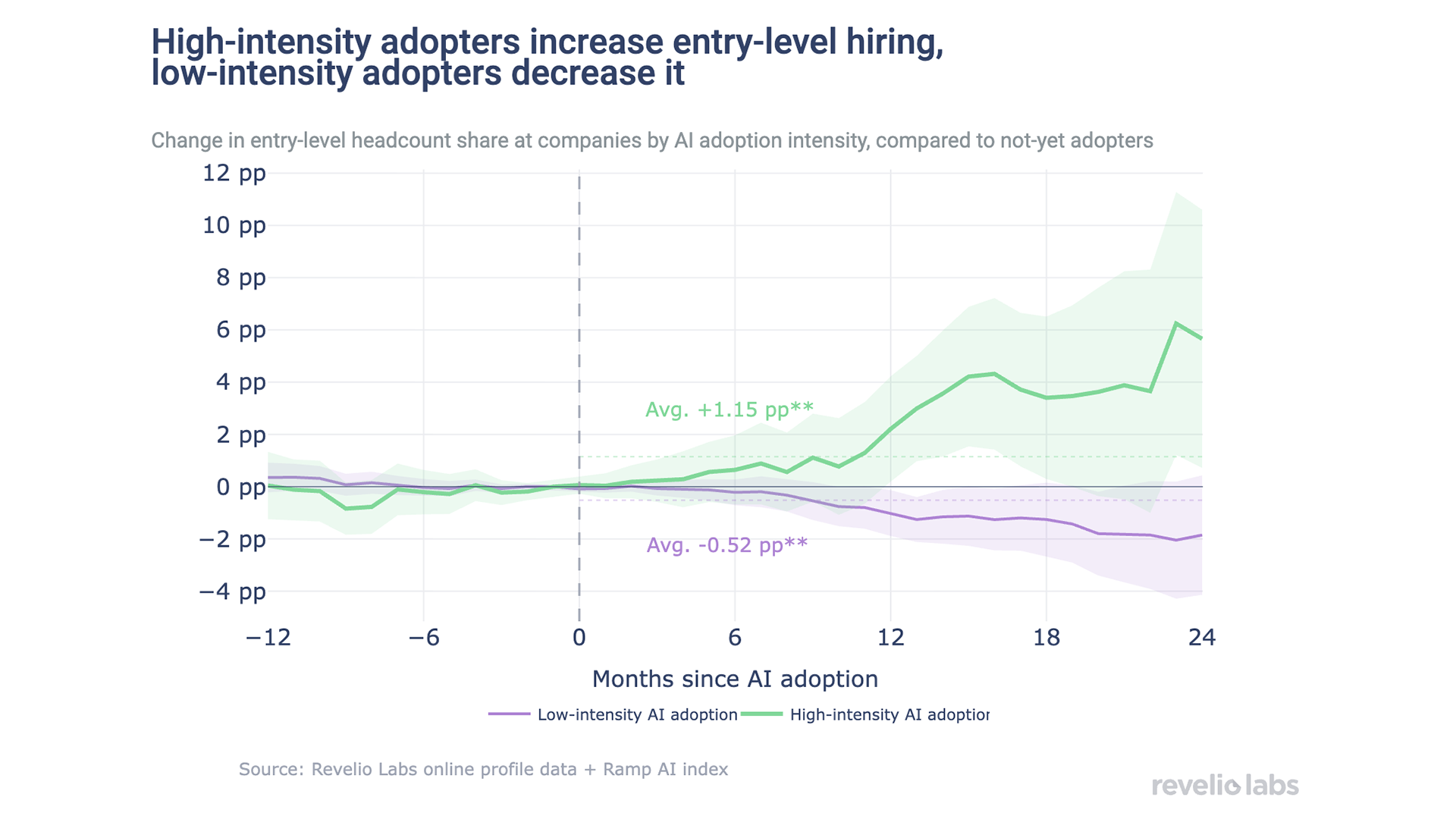
Companies making the largest investments in artificial intelligence are increasing their intake of entry-level workers, according to research from Revelio Labs and Ramp.
The study found that organisations making the largest AI investments increased the share of entry-level employees in their workforce, while companies making smaller AI investments recorded a decline. High-intensity adopters also expanded overall employment, while lower intensity adopters did not.
The analysis combined workforce data from more than 21,000 US companies with corporate spending on AI software. It identified organisations that had begun sustained spending on AI tools and tracked employment after adoption, instead of estimating AI adoption through occupations or job descriptions.
Around one quarter of companies in the sample had adopted AI by the end of 2025. Adoption was highest in information, finance and insurance and professional and technical services. Healthcare, construction, accommodation and food services and arts and entertainment recorded lower adoption rates.
Before adopting AI, these companies were larger, growing faster, employed a higher proportion of engineers, paid higher salaries and were more likely to have venture capital backing than organisations that had not yet adopted AI.
The researchers compared companies that had adopted AI with similar organisations that had not yet done so, then tracked employment over the following two years.
Among companies making the largest AI investments, the share of entry-level workers increased by 1.15 percentage points compared with organisations that had not yet adopted AI. Companies making smaller AI investments recorded a modest decline in the proportion of entry-level employees.
Companies in the highest third of AI spending per employee maintained employment levels around 10.2 per cent higher than organisations that had not yet adopted AI. Lower intensity adopters showed no statistically significant employment gains. The gap emerged several months after adoption.
The authors said it remains too early to draw conclusions about AI's long-term effect on employment. Their analysis found that the companies making the largest investments in AI were also the companies recording the strongest workforce growth.