

Care workers seek recognised qualifications to support career progression
Regulated qualifications and clearer career pathways are seen as the biggest factors in helping care workers build long-term careers, according to new research.
Most social care workers receive training, but many still see limited opportunities to build long-term careers. Regulated qualifications are emerging as the strongest driver of progression, according to new research from NCFE.
The awarding organisation surveyed 107 current and former social care workers from its CACHE alumni network to explore recruitment, retention and professional development across the sector. While concerns over pay and working conditions remain, respondents consistently highlighted recognised qualifications and clearer career pathways as essential to retaining skilled staff.
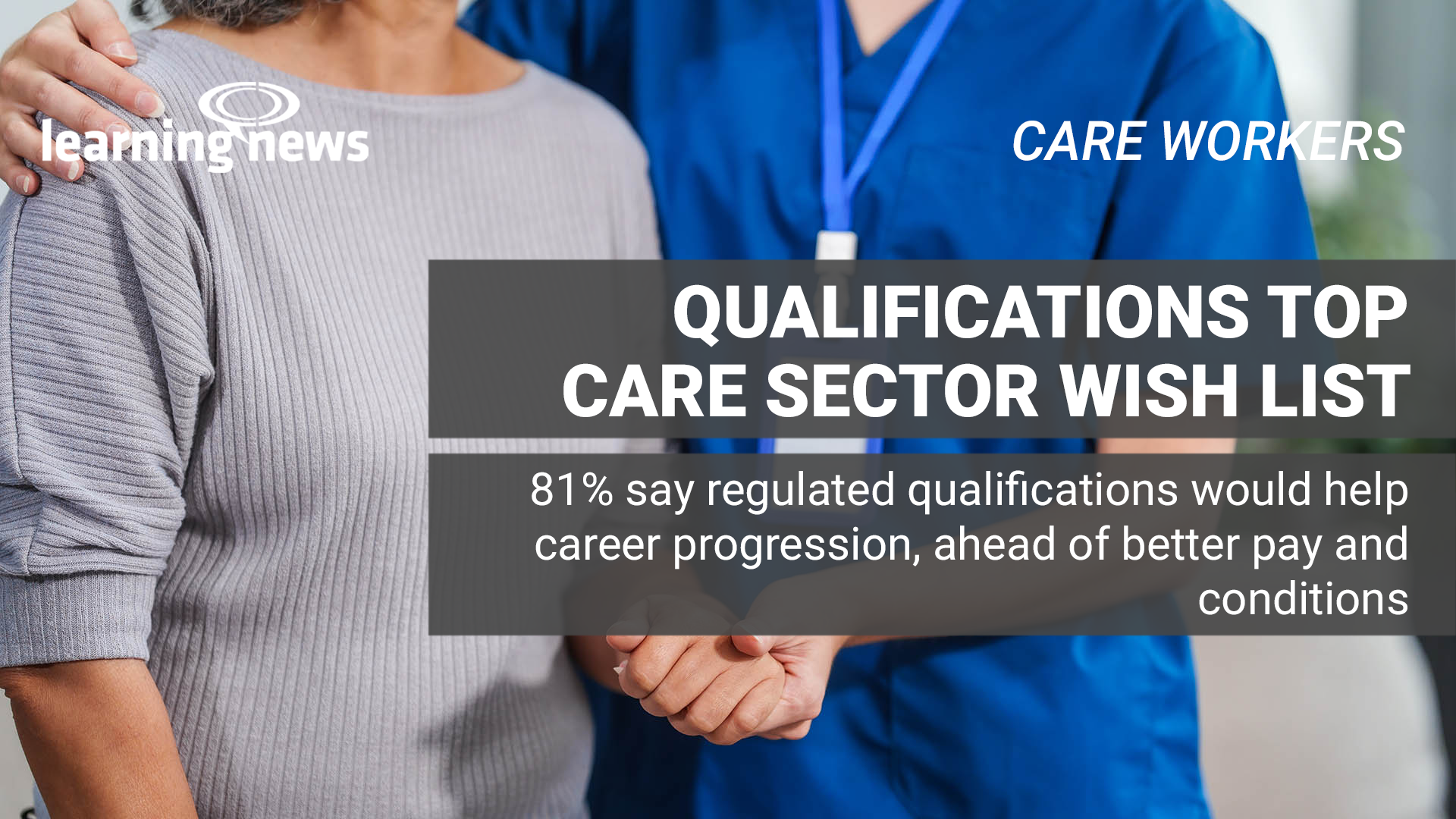
Regulated qualifications were identified by 81% of respondents as the single most important factor that would help them progress in their careers, ahead of better pay and conditions (76%). Leadership and specialist care training were also widely valued, suggesting demand for structured professional development rather than training delivered in isolation.
Access to training alone is not enough. Almost all current care workers (96%) said they receive training for their role, yet more than half (53%) have considered leaving the sector during the past year, including one in four who are actively looking for another career. Respondents frequently linked progression to recognised qualifications and clear routes into specialist and leadership roles rather than simply additional workplace training.
Career progression remains uncertain for many workers. Almost half (46%) either disagreed that clear career pathways exist in social care or said they were unsure, reinforcing concerns that development opportunities are not sufficiently visible or well defined. The report argues that qualifications need to be connected to transparent career pathways if they are to improve retention.
Michael Lemin, Head of Policy at NCFE, said the findings demonstrate both the challenges facing the workforce and its appetite for professional development. He said reforms to qualifications and skills offer an opportunity to strengthen progression routes and better recognise the specialist skills required in social care.
Despite the pressures, respondents continued to express strong commitment to the profession. More than half (55%) said they would recommend a career in care, citing the opportunity to make a meaningful difference to people's lives. The report concludes that attracting and retaining the workforce will depend not only on improving pay and conditions, but also on strengthening professional recognition through education, qualifications and clearer career pathways.
Social care workforce survey
- 81% said regulated qualifications would help them progress in their careers.
- 76% identified better pay and conditions as a progression factor.
- 96% of current care workers said they receive training for their role.
- 53% have considered leaving the sector in the past year.
- 25% are actively looking to change career.
- 46% said career pathways are unclear or were unsure they exist.
- 55% would recommend a career in social care.
- 107 current and former care workers took part in the NCFE CACHE alumni survey.
Get the report
Social care workforce report 2026: recruitment, retention, and progression