

Carberry challenges people profession to prove its impact on performance
CIPD chief executive calls for stronger business understanding and urges boards to invest in the people teams expected to deliver results.
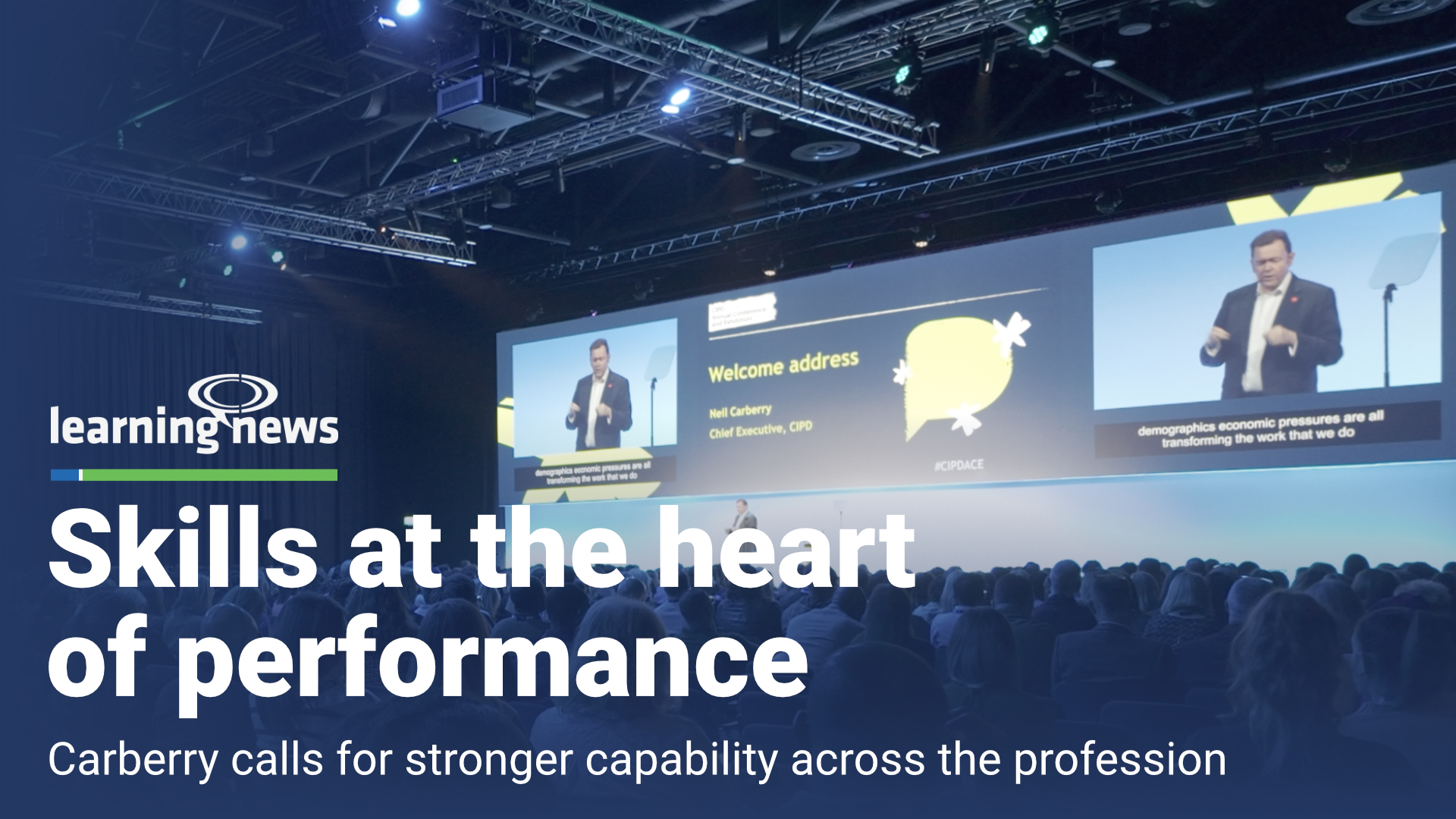
Neil Carberry has challenged people professionals to show how their work improves organisational performance, questioning whether the profession is doing enough to address employers’ most pressing problems.
Opening the CIPD Annual Conference and Exhibition in Manchester on 4 November, its new chief executive put developing skills, strengthening management and introducing technology among the business challenges on which the profession should be judged.
‘Are we, as a profession, doing enough, measured in the only metric that matters: impact, to solve them?’ he asked. ‘In some places yes, in others really no.’
He also challenged boards to fund the work they expected people teams to deliver: ‘Do not expect better performance while reducing the means to achieve it.’
In his first annual conference address as chief executive, Carberry set out three priorities: building workplaces that perform, developing the profession’s skills and taking responsibility for shaping future solutions.
He urged practitioners to understand where their organisations create value, what customers need and where performance is being held back.
The profession should stop talking about securing a ‘seat at the table’, he said, and earn its influence through the difference its expertise makes. Practitioners should shape and challenge decisions, rather than simply implement them.
Carberry acknowledged that much of the criticism directed at HR had been unfair, but said some had been justified. He questioned whether the function always focused on the right things, sometimes made business problems unnecessarily complicated or used language disconnected from the rest of the organisation.
‘I don’t think the answer, for any of us, is to defend everything done in the name of HR,’ he said.
‘It is to be clear on professional expectations, align to performance and become indispensable at doing the things that matter.’
He asked how employers would find, develop and retain key skills, build stronger management and introduce technology without losing the capabilities that matter most to customers. The profession did not have all the answers and needed to strengthen its ability to address those problems.
Carberry identified communication, supporting rapid changes to operating models and strategic workforce thinking as priorities. Compliance remained vital, but practitioners needed the skills and business understanding to handle difficult, contested decisions.
The CIPD would reassess its support over the coming months, including its Profession Map, to help practitioners meet those demands.
Chief executives and boards also had responsibilities. Carberry urged them to invest in their people teams and treat workforce and culture as drivers of performance, rather than simply as costs.
‘Performance is not something you extract from people. It is something you build with them,’ he said.
He argued that individual contribution depends on working relationships, management and shared purpose. Employers needed to be clear about what their organisations required, while hearing the workforce’s views.
Agreement on every decision was neither possible nor always desirable. Practitioners needed the evidence, judgement and trust to handle disagreement and make decisions that improved performance and the working experience.
Carberry called on the Government to put people, skills and participation at the heart of its growth agenda.
‘Do not treat workforce capability as something to attend to once the economic strategy has been written,’ he said. ‘It is the economic strategy.’
He highlighted young people outside education, employment or training, warning that they were missing opportunities to develop skills, discover their strengths and build confidence.
The profession also needed to make a stronger case for effective people practice, using evidence and experience to show what works, where barriers remain and what changes when people have the opportunity to contribute.
Carberry linked better workplace decisions to the economy’s ability to grow, from who gets hired and how people are managed to what training is funded and who gets a chance to progress.
‘Get enough of those decisions right, across enough workplaces, and we begin to change something much bigger than an HR metric,’ he said.
‘We change what our economy is capable of. And we change what people are capable of achieving for themselves.’