

AI changes how skilled workers build workplace expertise
Call for greater use of mentoring, hands-on practice and simulation as AI changes skilled work and employers replace exiting workers.
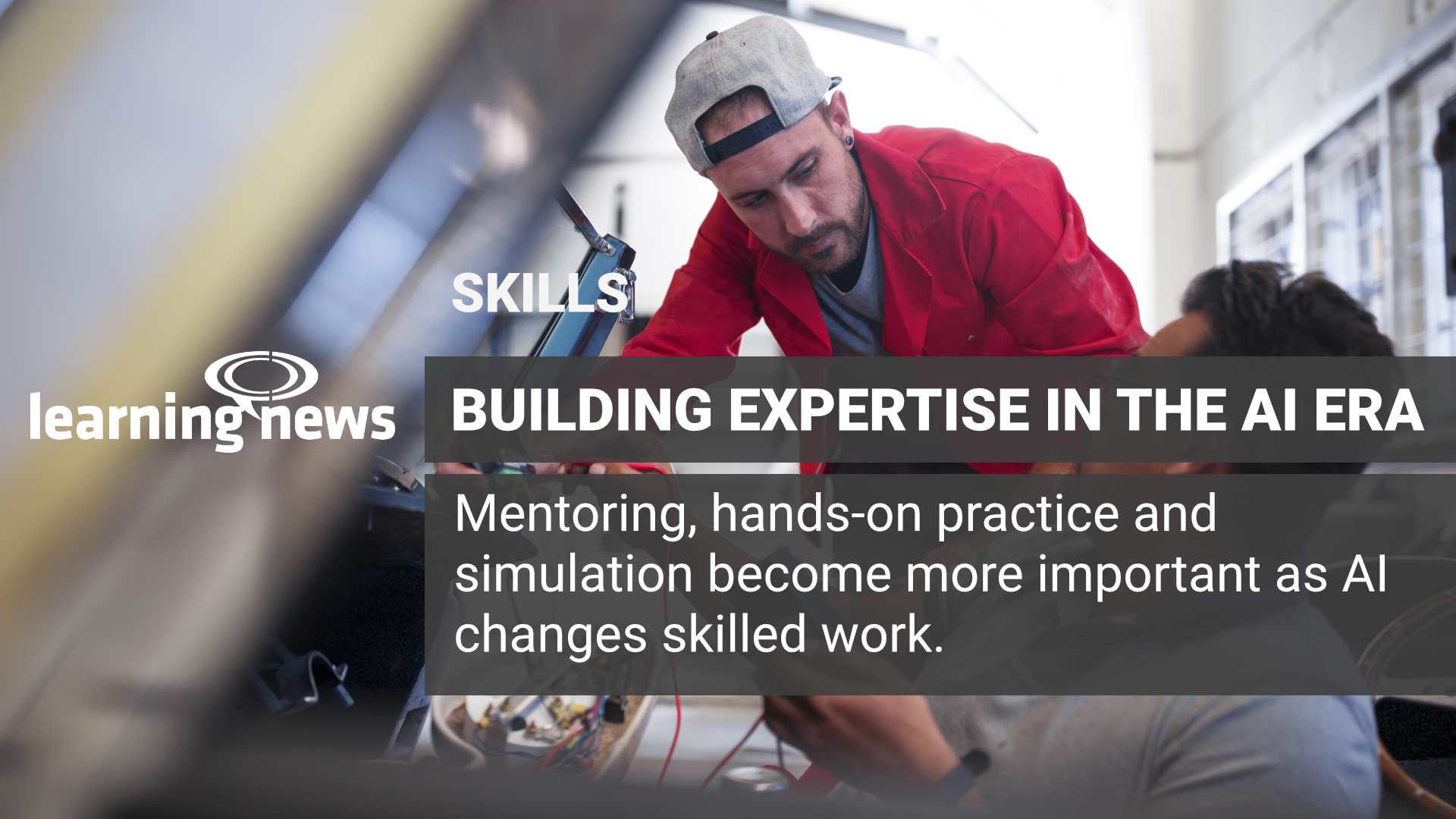
AI is changing not only the tasks performed in skilled occupations but how early-career workers acquire the practical knowledge needed to do them effectively and safety.
New Pearson research examines skilled trade, technical and service occupations in the UK, US and China, with detailed work on pharmacy technicians and industrial machinery mechanics.
Much of the expertise required in skilled occupations develops through supervised practice, observation, mentoring and hands-on experience. Workers move from understanding procedures to developing situational judgement, adaptability and tacit knowledge through doing the work.
Some of that knowledge is difficult to document. One vocational training specialist interviewed for the report described experienced welders being able to judge the quality of work from the sound of welding, a distinction a new trainee would not recognise.
Pearson argues that capturing experienced workers' knowledge can preserve some expertise, but early-career workers still need opportunities to develop their own capability through practice and feedback. It recommends greater use of mentoring, hands-on practice and simulation alongside role-specific AI literacy.
In the UK, more than four million job openings are projected from replacement demand between 2025 and 2035, as workers retire, change occupation or otherwise leave the workforce.
Overall employment across the occupations examined is projected to increase by just 26,000 over the decade, but that relatively flat total masks growth in some occupations and decline in others.
Behind the relatively flat overall employment figure is considerable workforce turnover and movement between occupations, creating a large requirement to recruit and develop incoming workers and transfer expertise to them.
A participant working in the UK pharmacy sector told Pearson that revising education and training standards for pharmacy technicians can take two to three years.
Pearson says closer links between employers and training providers are needed so changes in work can feed into learning more quickly. It also calls for occupational training to develop critical judgement and the ability to challenge AI outputs, rather than treating AI literacy as a generic technical skill.
The research combines labour-market and AI-exposure analysis with surveys, interviews and roundtables involving early-career workers, employers, educators and industry representatives.
Practical judgement and tacit knowledge develop through experience and can be difficult to document or transfer digitally.
As AI changes skilled work and employers develop incoming workers to replace those leaving occupations, mentoring, hands-on practice, simulation and knowledge transfer become more important.
Links
Get the report - For Every Future: Preparing Early-Career Skilled Trade, Technical and Service Talent for an AI-Influenced World