


Learning Without Limits: Why Africa Is the Future of Global Education
Africa is set to become the centre of the global workforce by 2050, but a lack of access to affordable, high-quality education tools holds back its full potential. This article explores how generative AI is removing cost barriers and why EdTech companies must adopt inclusive, partnership-focused pricing models to unlock the continent's future.
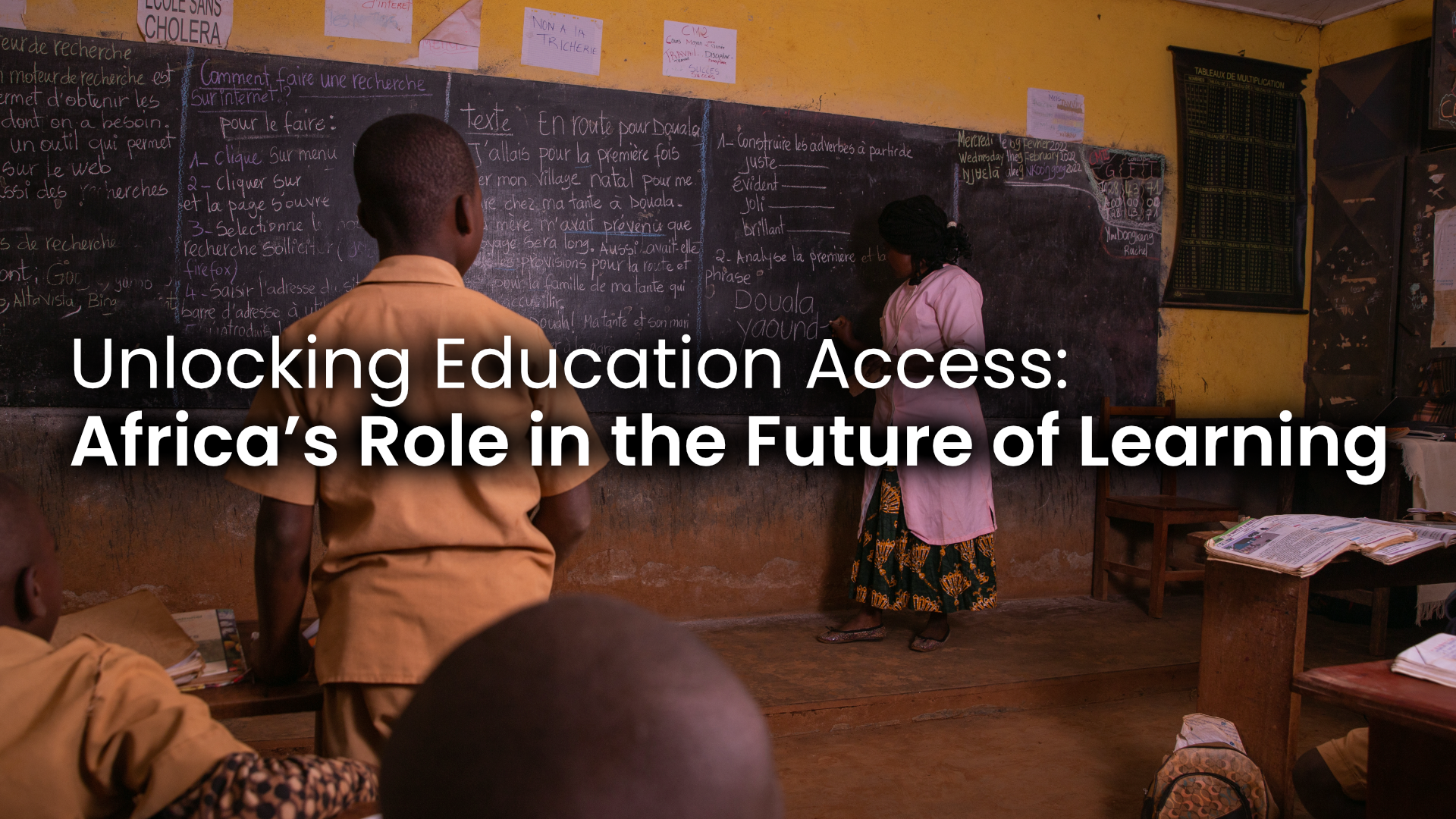
As the world’s population ages, Africa stands apart. With a median age of just 19, it is not only the youngest continent but also the most demographically significant. By 2050, it is projected that one in four workers globally will be African. This is not just a statistic. It is a seismic shift in the global workforce landscape.
And yet, the systems meant to prepare this future workforce are underfunded, under-resourced, and priced out of access to high-quality educational tools. The obstacle is not talent. It is infrastructure, cost, and scalability. Addressing this gap is not just a moral imperative. It is an economic necessity.
The Cost Barrier in Education
Traditional e-learning content production remains prohibitively expensive. Developing a single, professional-grade online course can cost anywhere between £50,000 and £100,000. While such budgets may be standard in North America or Europe, they are simply out of reach for most schools, training centres, and universities across Africa.
This is not due to a lack of demand or capability. It is a straightforward issue: the tools required to build world-class digital learning have, until recently, been restricted to institutions with significant financial resources.
AI Levels the Playing Field
This is where artificial intelligence has changed the game. Generative AI is already transforming content creation in education. Entire courses, including interactive media and assessments, can now be produced in under 20 minutes using tools such as Open eLMS Learning Generator.
What was once a multi-month project with high production costs has become a fast, low-cost process available to anyone with a PDF and an internet connection. The quality is comparable. The speed is exponential. The cost is dramatically reduced.
In short, AI has democratised access to education development. The problem is no longer about affordability. It is about awareness and adoption.
From Inequality to Inclusion
Removing financial barriers opens up the potential for schools in rural areas of Ghana, Nigeria, or Kenya to produce the same calibre of content as top institutions in London or New York. Once the quality of content is equal, the real differentiator becomes talent, not funding.
And the talent already exists. Across the continent, young professionals are launching startups, conducting research, and building companies. What they need are scalable, relevant educational tools that allow them to develop the skills required to succeed globally.
A Call for Partnership Pricing
This is where the global EdTech community must step up. A flat pricing model, designed for developed markets, cannot serve a global population. Region-specific pricing that reflects local economic realities is vital.
This is not about reducing the value of the product. It is about aligning the value with market potential. Africa does not need discounted charity pricing. It needs thoughtful partnership pricing that recognises the future value of collaboration.
When the right tools are priced appropriately, the return on investment, both economically and socially, can be immense. Businesses that understand this will not only open new markets but help shape the future of global talent.
A Shared Future
Africa is young, connected, and ambitious. With the right access to learning tools, the continent has everything it needs to lead the next phase of global growth.
AI has made the technology available. Now it is up to businesses, governments, and institutions to act. If we embrace this opportunity at scale, we will not only support a continent. We will invest in a future workforce that will define the global economy for decades to come.