

AI drives demand for data storytelling skills
More than 2,300 people have registered for an AI and data storytelling workshop, reflecting demand for guidance on visualisation, communication and AI oversight.
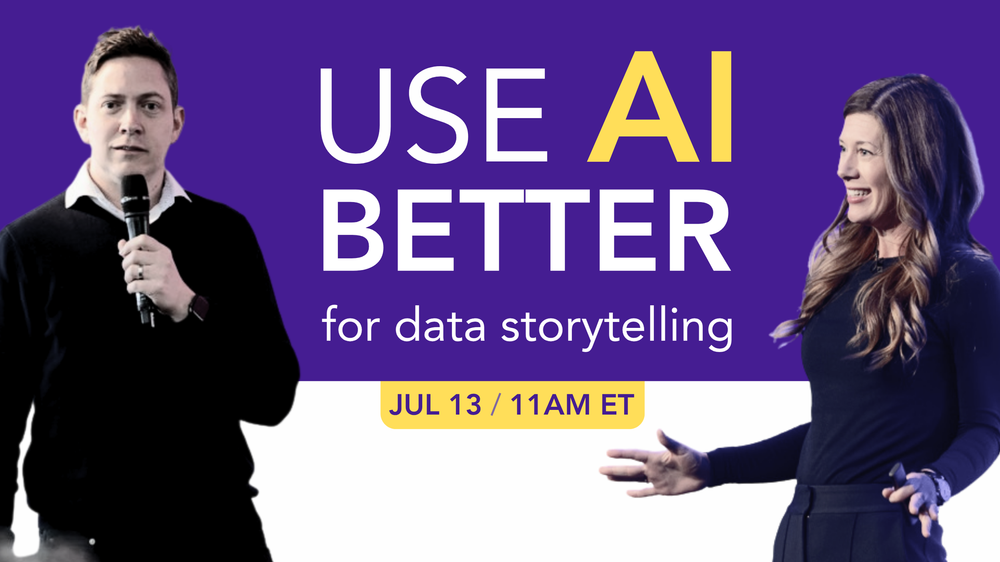
Interest in AI's role in workplace communication continues to grow, with more than 2,300 people registering for a live workshop on AI and data storytelling.
The session, organised by Storytelling with Data and led by founder and author Cole Nussbaumer Knaflic, addresses a set of questions increasingly appearing in learning programmes: how to use AI when analysing information, selecting visualisations and building presentations, while avoiding errors and maintaining human oversight.
According to Storytelling with Data, registrations include data and analytics professionals alongside HR, talent and people operations practitioners. Executive leaders, educators, marketers and product teams also feature among those signed up to attend.
The company says requests to incorporate AI into its training programmes have increased significantly. Questions that previously appeared occasionally in workshops are now becoming a regular feature of client conversations.
Among the topics attracting attention are the risk of AI hallucinations, the use of AI to recommend and create charts and graphics and the role of AI in shaping presentations and communicating findings to different audiences.
The workshop will demonstrate examples using ChatGPT, Claude, Gemini and Copilot. Storytelling with Data says these are currently the most widely used AI tools among registrants.
The company is not introducing a new methodology. Instead, it is applying established data storytelling principles to AI-assisted workflows and examining where automation is useful and where human judgement remains necessary.
That balance is becoming a recurring theme in workplace learning. Organisations are encouraging employees to adopt AI tools, but many are still determining how those tools fit into existing work practices. For professionals responsible for communicating data, the questions extend beyond productivity to accuracy, interpretation and audience understanding.
The scale of interest in the workshop suggests that employees are looking for practical guidance rather than general discussion about AI. Data storytelling, presentation development and visual communication are emerging as areas where organisations are testing how AI can support everyday work without replacing professional judgement.
Links
AI for data storytelling: better graphs, slides, and presentations