


LPI Research Reveals AI Capability Gap in L&D
New research from the Learning and Performance Institute shows learning leaders have moved beyond AI hype - but major gaps remain in literacy, governance, data fluency and strategic capability.
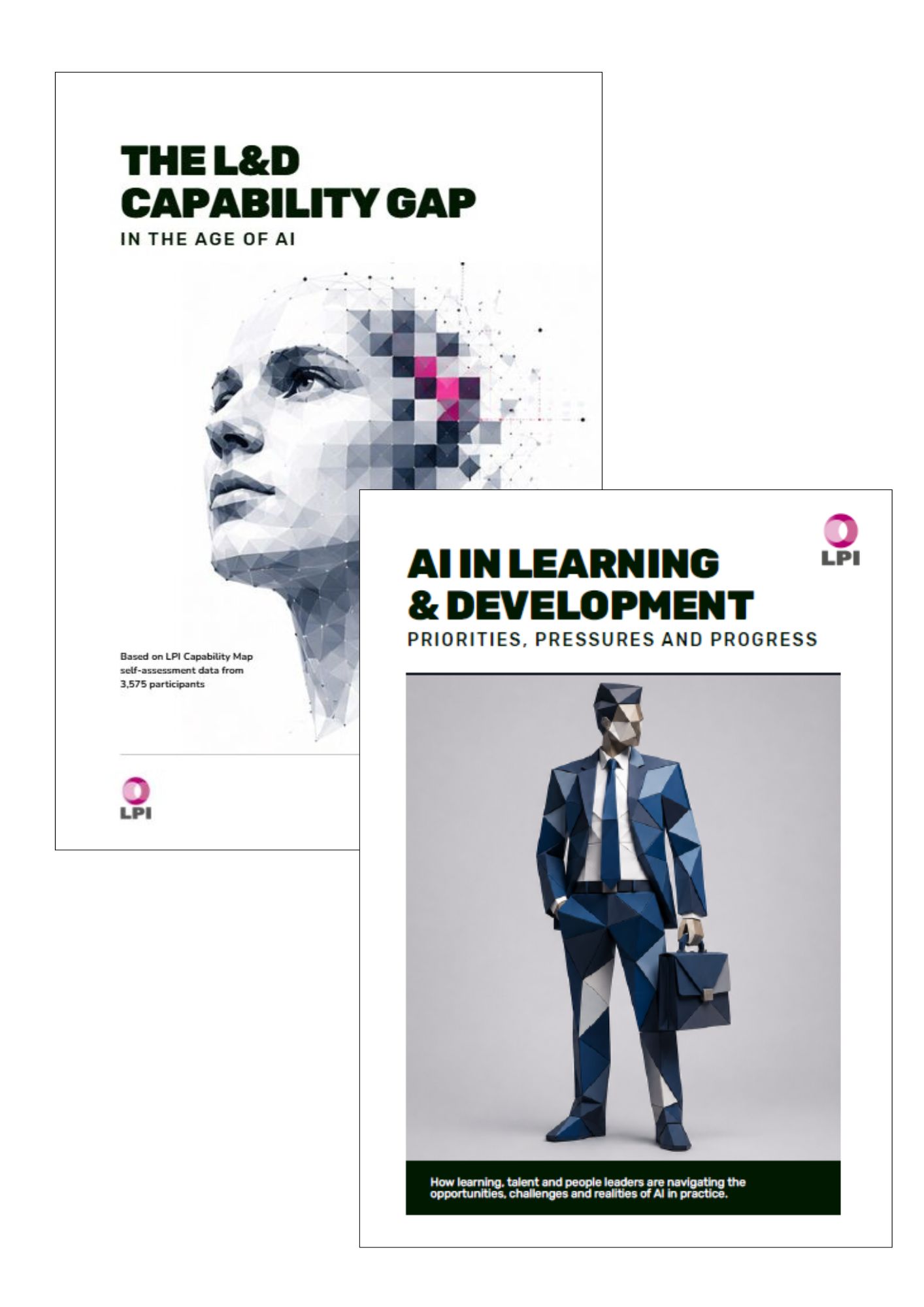
The Learning and Performance Institute (LPI) has released two new research reports examining how learning and development is responding to the rapid rise of artificial intelligence.
Together, AI in Learning & Development: Priorities, Pressures and Progress and The L&D Capability Gap in the Age of AI, produced in partnership with Abodoo, provide one of the clearest pictures yet of the opportunities, pressures and capability gaps facing L&D teams as AI moves from experimentation into everyday workplace learning.
The first report, AI in Learning & Development: Priorities, Pressures and Progress, is based on insights gathered from 692 learning, talent and people leaders registering for the LPI’s LEARNING LIVE: AI Edition. Across almost 2,000 challenge statements, respondents identified the practical issues they are navigating as AI becomes a growing part of learning strategy, delivery and operations.
The findings show that AI adoption in L&D has moved beyond simple curiosity. Learning leaders are now focused on how to build confidence and capability, embed AI into workflows, identify practical use cases, select appropriate tools, create responsible governance frameworks and demonstrate measurable value.
The report identifies AI literacy, skills and confidence as the most prominent theme, followed by use cases and workflow integration, tools and pace of change, governance, adoption, measurement and data readiness.
The second report, The L&D Capability Gap in the Age of AI, analyses LPI Capability Map self-assessment data from 3,575 L&D professionals across 1,874 organisations. Conducted with Abodoo Skills Intelligence, the report examines current L&D capability across 30 professional competencies and benchmarks the findings against wider global skills research.
Its headline finding is stark: AI Literacy is the lowest-scoring domain across the entire LPI framework, with an average proficiency score of just 1.54 out of 4. The report also finds that traditional design and delivery skills remain the profession’s strongest areas, while AI, data, governance, analytics and strategic impact lag behind.
The combined findings point to a profession in transition. L&D is no longer asking whether AI matters. Instead, the challenge is how to build the capability, confidence, governance and operating models needed to use AI safely, effectively and at scale.
Ed Monk, CEO of the Learning and Performance Institute, said:
“AI has moved from the edges of workplace learning to the centre of the conversation. But these reports show that access to tools is not the same as readiness. Learning teams are under pressure to lead AI adoption, build capability and guide responsible use - yet the capability data shows that many are still developing the very skills they now need most.
“This is not a criticism of the profession. It is a call to action. L&D has a critical role to play in helping organisations adapt to AI, but we need to be honest about where the gaps are and deliberate about how we close them.”
The LPI says the research should prompt learning leaders to look beyond AI experimentation and focus instead on the conditions required for sustainable adoption: capability mapping, practical AI literacy, governance, human skills, workflow integration and evidence of value.
Key findings across the two reports include:
- AI literacy, skills and confidence is the most frequently raised challenge among learning leaders.
- 71% of respondents referenced at least one readiness issue spanning skills, adoption or governance.
- AI Literacy is the lowest-scoring domain in the LPI Capability Map, averaging 1.54 out of 4.
- AI System Interoperability and Data Literacy in AI for L&D are the weakest individual competencies in the capability dataset.
- Traditional design and facilitation skills remain strong, but strategic, analytical and AI-related capabilities lag behind.
- Governance is emerging as both a practical adoption challenge and a critical capability gap.
The reports also make clear that AI adoption is not only a technology issue. It is a capability and change challenge. Organisations that move fastest are likely to be those that build confidence, governance, data fluency and practical operating discipline - not simply those that adopt the newest tools first.
The LPI is releasing a public insight edition of The L&D Capability Gap in the Age of AI, with the full report available exclusively to LPI members. Members can also access the complete AI in Learning & Development: Priorities, Pressures and Progress report, along with deeper insights, practical resources and opportunities to discuss the findings through the LPI community.
Reports
AI in Learning & Development: Priorities, Pressures and Progress
Based on insights from 692 learning, talent and people leaders registering for LEARNING LIVE: AI Edition.
The L&D Capability Gap in the Age of AI
Produced by the LPI and Abodoo, based on LPI Capability Map self-assessment data from 3,575 L&D professionals across 1,874 organisations.
About Abodoo
Abodoo is a skills intelligence platform that helps organisations understand, develop and mobilise workforce capability through live skills data, analytics and benchmarking.