


When branching scenarios earn their place in training
A new iSpring guide looks at when branching scenarios can strengthen workplace learning and how L&D teams can design believable decisions without creating unnecessary complexity.
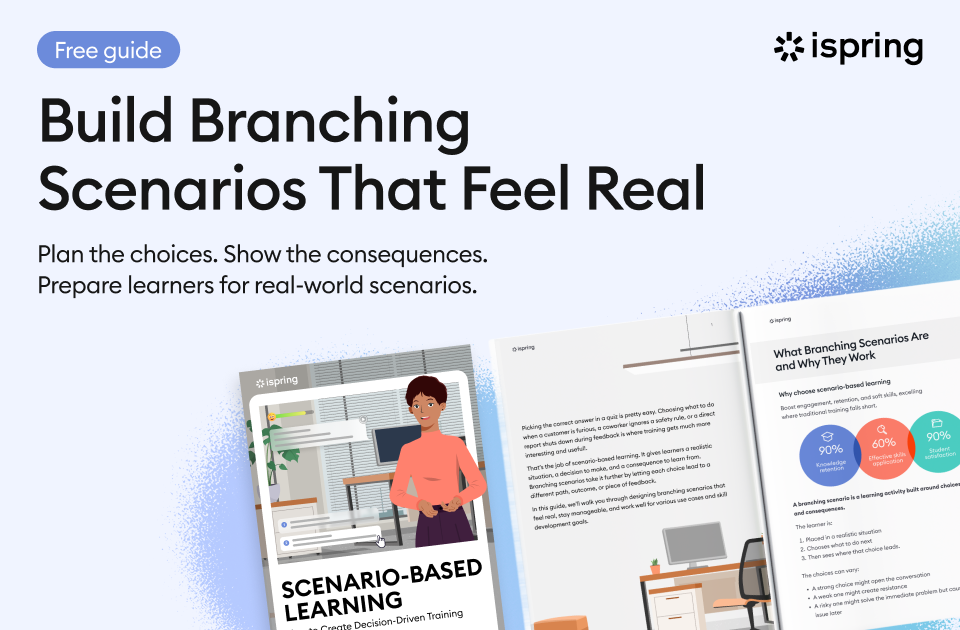
Branching scenarios can make training more engaging, but interactivity alone does not make them effective. Their value comes when employees need to weigh up options, respond to context and see how their decisions affect what happens next.
That is the focus of iSpring’s new guide, Scenario-Based Learning: How to Create Decision-Driven Training with Branching.
The guide begins with a useful question for L&D teams: does the learner need to make a decision, or simply remember information? For straightforward knowledge or linear processes, a lesson, demonstration, checklist or quiz may be enough. Branching becomes more relevant when judgement, timing or context influence the outcome.
It also examines a common weakness in scenario design: choices that make the correct answer too easy to spot. Instead, the guide recommends believable alternatives, each with its own logic and consequences, so learners have to think about what they would actually do.
Among the topics covered are:
- choosing when a branching format makes sense
- turning workplace situations into decision points
- writing credible choices and consequences
- keeping branching paths manageable
- mapping a scenario before development begins
- reviewing and testing scenarios before launch
The guide includes examples, a scenario-planning template and a build checklist for L&D teams developing decision-based learning.
The full guide, Scenario-Based Learning: How to Create Decision-Driven Training with Branching, is available free from iSpring.