


A guide for L&D teams: Why employees ignore training and what to do about it
iSpring's new guide moves past "make it more engaging" and looks at the real friction points that keep people from showing up to learning.
Most L&D teams have been there: a well-designed course, a clear business need, and they still have low completion, low opens, low follow-through. The usual diagnosis is that the content wasn't engaging enough. So the next version gets more interactive, more visual, more gamified. And the numbers stay flat.
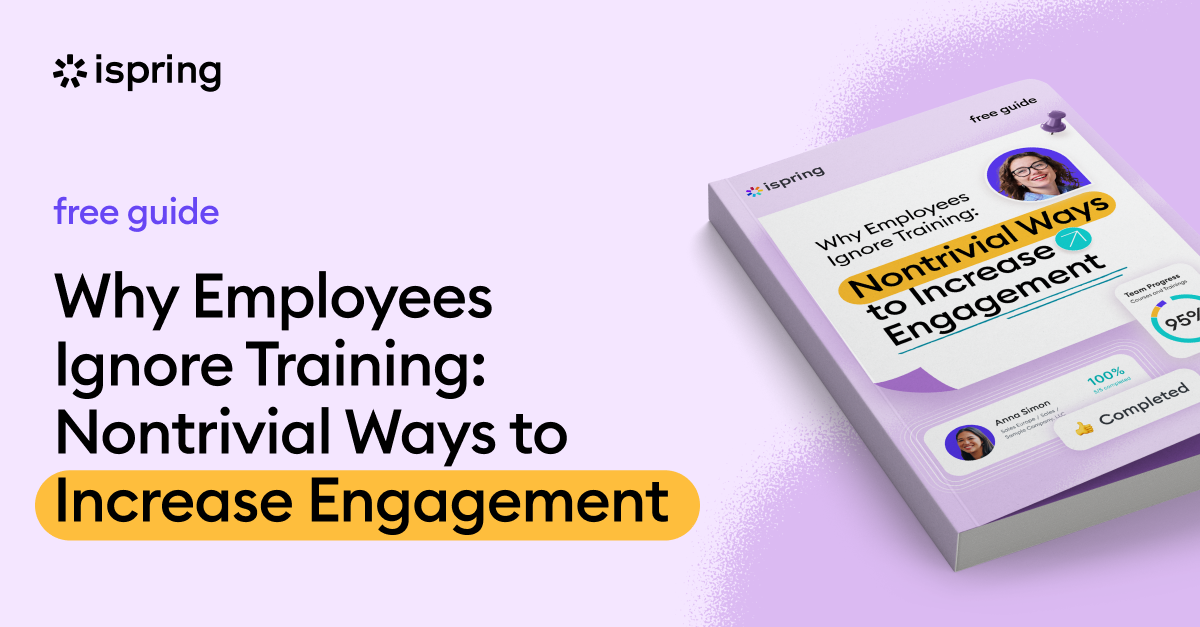
iSpring's new guide, Why Employees Ignore Training: Nontrivial Ways to Increase Engagement, starts from a different premise: the problem is rarely the course itself. It identifies four specific points where the learner experience tends to break down, and most of them have nothing to do with course design:
- Access friction — too many steps between the learner and the first screen
- Meaning friction — no clear answer to "why does this matter to me right now"
- Comprehension friction — cognitive load created by how content is presented, not how hard the topic is
- Isolation friction — learning that ends when the course closes, with no connection to how the team works
Each comes with concrete fixes. One of the more memorable examples is iSpring's own: a standard course reminder email at 52% open rate versus a short verse about the same course at 83%. Hard to argue with that.
The guide is free to download.
Get the guide: Why Employees Ignore Training