


Report highlights how thought leadership builds trust with B2B buyers
A synthesis of leading studies shows trust-building insight is increasingly decisive in crowded B2B buying journeys.
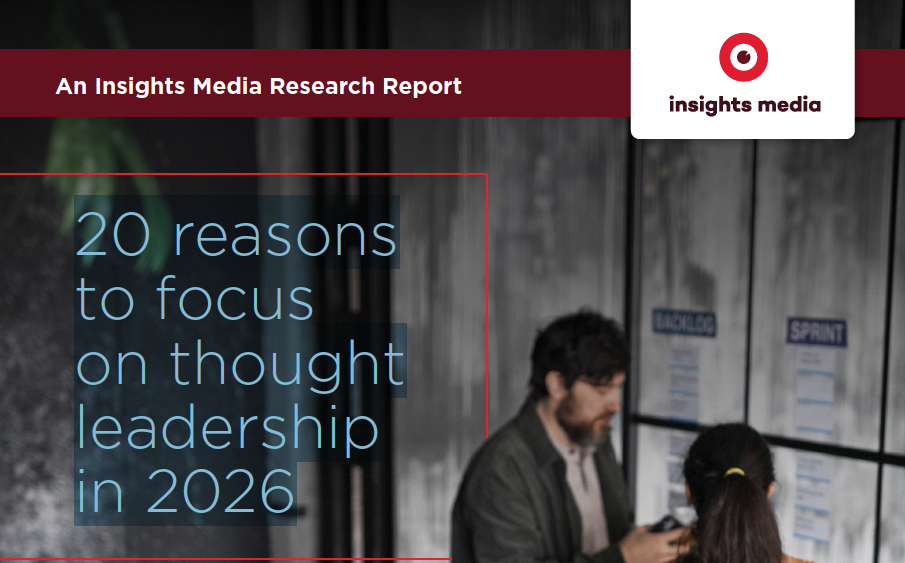
A new Insights Media research report argues that in crowded learning, HR and talent markets, thought leadership has shifted from a branding tactic to a commercial requirement - helping buyers reduce risk, build confidence and align internally around decisions.
The report, 20 reasons to focus on thought leadership in 2026, brings together evidence from major studies including Edelman, Edelman/LinkedIn, Momentum ITSMA, PRinHR and FT Longitude. It identifies 2026 as a tipping point: the rise of AI-generated content has increased output but reduced differentiation, while buying groups have grown larger and more cautious.
“In 2026, thought leadership isn’t about publishing more content,” the report concludes. “It’s about earning trust, shaping decisions and standing out when everything else sounds the same.”
Key findings from the report include:
- 73% of decision-makers say thought leadership is more trustworthy than marketing materials when assessing suppliers
- 99% of senior executives say thought leadership is important or critical when evaluating potential advisors
- 55% of decision-makers say thought leadership becomes more important during economic uncertainty
- 49% of executives use thought leadership to reduce the risk of making poor decisions
- 77% of buyers are more likely to work with providers that produce strong thought leadership
- 71% of buyers identify a preferred provider before a formal shortlist is created
- 66% of buyers would not engage with a provider whose thought leadership is weak
- 57% say thought leadership content now feels indistinguishable — and 72% of marketers fear AI will further homogenise it
- 74% of buyers want thought leadership that challenges assumptions, and 63% want guidance for the next 3–12 months
- 53% say brand recognition matters less when thought leadership is high quality.
The report also highlights the growing influence of “hidden buyers” - internal stakeholders who are not the primary users of a product or service but increasingly shape purchasing decisions. It finds that hidden decision-makers consume thought leadership at similar rates to target buyers, but are less likely to interact with sales teams, making insight-led content a primary route for building influence.
Alongside the research, Insights Media outlines a practical partnership model for marketing teams looking to build credible, evidence-led thought leadership without overcommitting - delivered one day a week, one day a month, or in short, focused sprints.
Download your copy of 20 reasons to focus on thought leadership in 2026 here.