


Research reveals what makes people feel happiest at work
People, results and recognition are the top three drivers of employee happiness, according to new research by Ciphr
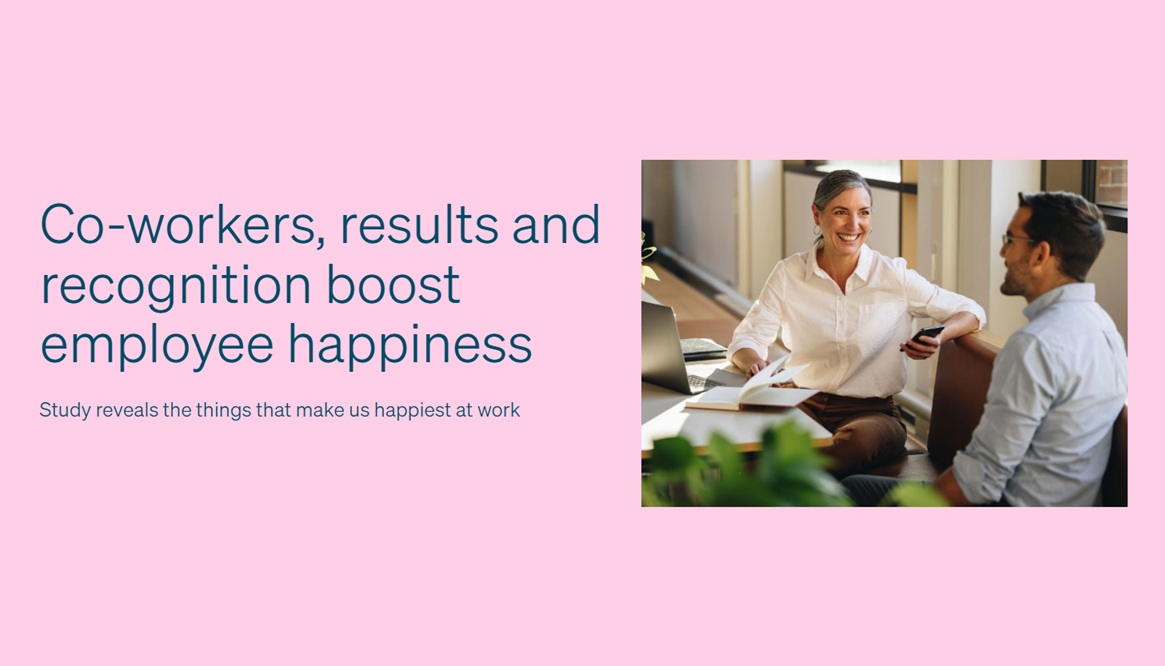
New research has revealed what makes people feel happiest at work.
A survey of 2,000 employed UK adults, commissioned by HR software and eLearning content provider Ciphr, has found that most (88%) can name at least one thing about their job that makes them feel happy. The average across all employees is five things.
Over a third (36%) of employees said that having positive connections with the people they work with – their co-workers, teams and managers – is the biggest contributor to their happiness. Seeing the results and impact of their work came a very close second (36%).
Pay doesn’t even feature in the top five. Recognition (selected by 34% of respondents), purposeful work (34%) and job satisfaction or enjoyment (33%) are all more likely to make people happier at work than their salary and benefits (31%).
Around a quarter of employees also find their happiness increased by having flexible working (28%), work variety (27%), autonomy (26%), and being part of a team (24%).
Top drivers of employee happiness:
- Work colleagues / the people they work with (36% of survey respondents)
- Seeing the results of their work (36%)
- Being recognised for their work / the role they play at their organisation (34%)
- Doing purposeful / meaningful work (34%)
- They enjoy doing their job / the work they do (33%)
- Their salary and benefits (31%)
- Having flexible working, including remote or hybrid working, reduced or compressed hours, or flexitime (28%)
- Having variety at work (27%)
- Having work autonomy: some say or control over their workload, tasks and schedule (26%)
- Collaborating with others at work / being part of a team (24%)
- Working at home (23%)
- The company they work for, they like its employer brand, reputation, values and workplace culture (21%)
- Being part of the positive impact that their company has on the community and/or environment (16%)
- Socialising with their colleagues outside working hours (16%)
- Helping to train or mentor other people / sharing their insights and experience (16%)
How employees view their jobs
People were also asked how they felt about their work more generally. And it’s these results that highlight how people’s happiness – how often they feel happy – can influence how they view different aspects of their jobs.
Ciphr’s research suggests that ‘happier’ people tend to view their employee experience more favourably. Employees who feel happy more often than not are significantly less likely to think about changing jobs, and more likely to find their work enjoyable, than employees who feel happy less often .
People who feel happy 20 days or more a month are twice as likely to feel engaged and fulfilled by their work, to feel valued, and to feel listened to by their employer. Nearly three-quarters (72%) find their job fulfilling and engaging all or most of the time. Two-thirds (67%) think that their skills and experience are being fully utilised, and 63% feel that their views and opinions are listened to.
And the more employees like their work, the ‘happier’ they are. Over two-thirds (68%) of employees who said they enjoyed their job, typically feel happy 20 days or more a month.
In comparison, those who only feel happy 10 days or less a month reported significantly lower job satisfaction. Nearly half feel overworked (47%) and only a third (32%) feel engaged or valued.
Why employee happiness matters
Karen Lough, director of people at Ciphr, says: “Despite our many differences, people do share many things in common when it comes to who and what makes us happy. Generally, people are happiest when they feel connected – whether that’s spending time with their loved ones or working alongside people they get on with, when they feel financially secure, and when they feel relaxed and well rested.
“Happiness is important for our health and wellbeing. It can help counter stress and burnout and help you feel more energised and engaged.
“So, when employees aren’t happy at work, it shows up in their performance. Their energy fades, as does their job satisfaction, and they are less likely to go that ‘extra mile’ to get the job done. From an HR perspective you can spot it in engagement scores, retention risk, and turnover.
“Employers can’t control everything that might negatively affect people’s happiness at work. But there’s lots they can do. Happiness is built by doing the basics well: making sure that employees are treated fairly, are doing meaningful work, that they have clear expectations, the right tools, opportunities for career development, managers who can support them, and, most importantly, have leaders who are transparent, authentic, and who listen and keep their word.
“The importance of recognition – recognising effort, not just outcomes – also shouldn’t be underestimated. Because, as this survey shows, people really do feel happier knowing that their employer appreciates and values their work.”
Lough adds: “At Ciphr, we know that employee happiness is vital to our success. So much so that, every month, we ask our people to record how happy they feel at work in their monthly performance catch ups. Those insights are reviewed and reported to our board. This regular and ongoing feedback helps us understand what's driving wellbeing, where we need to improve, and how we can better support our people.”
Ciphr’s study into what makes people feel happy (at home and at work) is available at https://www.ciphr.com/infographics/what-makes-people-feel-happy. The research includes the results from a survey of 2,000 employed UK adults, commissioned by Ciphr and conducted by OnePoll, last month (February 2026).
Ciphr is the go-to HR and payroll software partner for UK organisations with 200 to 2,000 employees. Its integrated HR, payroll, benefits, learning and recruitment software, services and content provide invaluable insights to HR teams to help inform their people strategy and grow and develop their organisations. Ciphr is on a mission to amplify the voice and value of HR through intelligent people data solutions that help HR be heard – in the boardroom and across the business.
For more information, please visit www.ciphr.com.